Helping every child imagine, own and build their future.
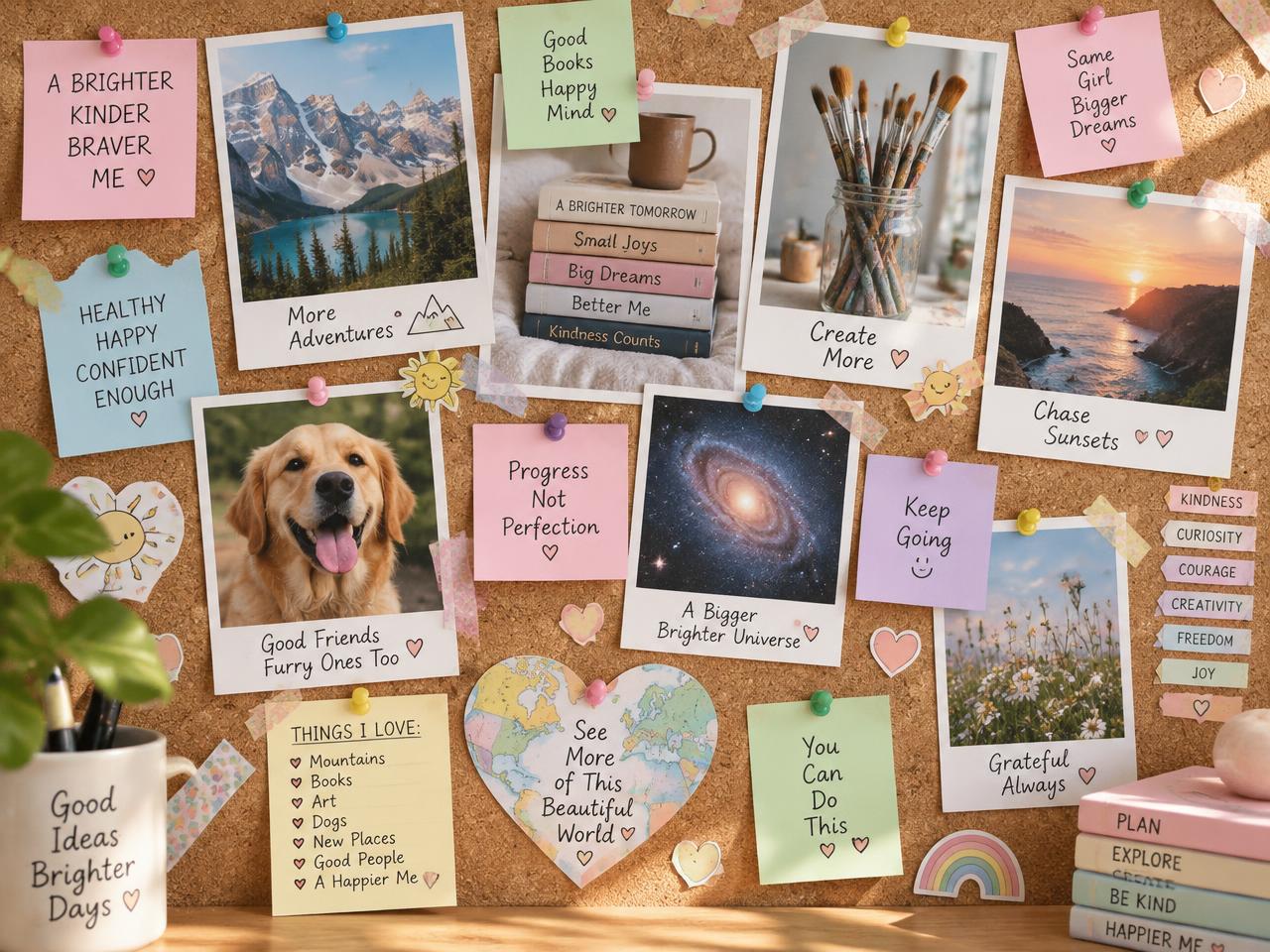
“This is the future I imagine, and these are the things I can start doing now.” A 60-minute discovery activity that turns a child’s own words and choices into a vision board they are proud to keep.
Imagine → articulate → share → act → reflect → reshape
Why it matters
Built to support the relationships that shape a child.
Child ↔ Self
“Who am I becoming?”
Child ↔ Peers
“Let me tell you what matters to me.”
Child ↔ Teacher
“Help me become this person.”
Child ↔ Parent
“Understand the future I imagine for myself.”
Parent ↔ School
“How can we together support the future this child is beginning to imagine?”
The activity
Seven steps, one board, made entirely by them.
- 1
Things I Love
Rapid-choice activity
Interests, passions, sources of joy
- 2
Future Me
Imagine yourself 5–7 years later
Aspirations and desired identity
- 3
My Superpowers
Choose qualities you want to possess
Character and personal growth
- 4
My Dream Life
Select desired experiences and achievements
Goals across different dimensions
- 5
My World
People, places and causes you care about
Relationships and contribution
- 6
My Vision Symbols
Colours, words, images and symbols
Visual language for the board
- 7
My North Star
Complete one powerful sentence
Central message of the board
- ★
Start Doing Now
Choose 3–5 actions for today
The bridge from vision to action
Photos can be added at any point, answers save as the child goes, and the finished board can be revisited and reshaped later.
What it makes possible
A board that keeps working long after it’s finished.
- Children connect with buddies who share their vision and goals.
- Children identify a one-step-ahead action plan.
- Children build portfolios with evidence of progress.
- Children learn self-reflection and self-regulation.
- Children make decisions that align with their goals.
- Children discover the diversity of aspirations and inspire one another.
- Teachers learn things conventional academic interaction rarely reveals.
- Parents talk about the things that matter to their children.
- Schools provide relevant support for each child's individual growth.